
Dear Executive,
There is a risk quietly growing inside many organisations.
It does not appear on financial statements. It is not highlighted in quarterly reports. It rarely features in board discussions.
But it shapes every decision your organisation makes.
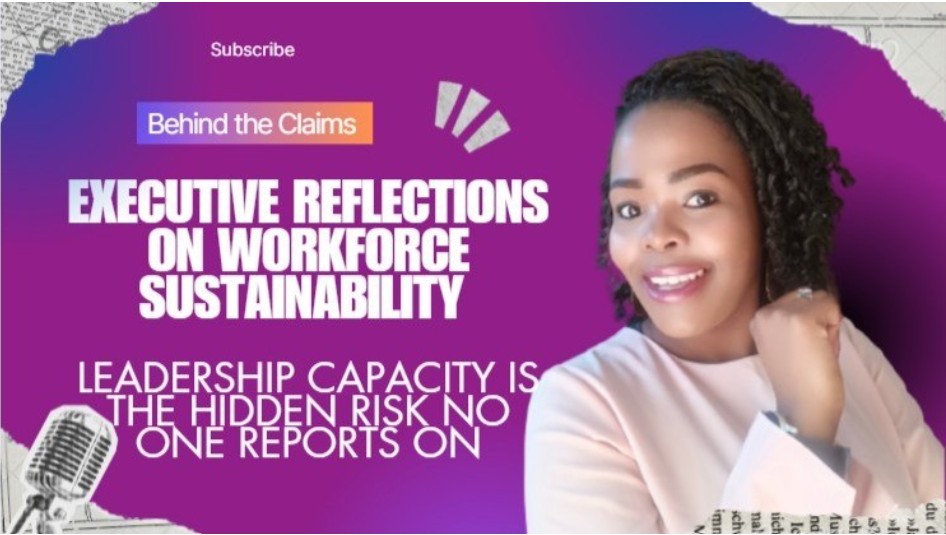
Leadership capacity.
In the past few years, the demands on executives have multiplied:
Constant restructuring, hybrid workforce complexity, regulatory pressure, stakeholder scrutiny and relentless decision velocity.
And yet the structural expectations placed on leaders have not been redesigned to match this intensity.
So leaders compensate.
They work longer. They absorb more. They make faster decisions with less space to think. They operate closer to cognitive saturation than they admit.
This is not a resilience issue.
It is a design issue.
Capacity erosion does not announce itself dramatically.
It shows up subtly:
• Strategic thinking replaced by operational firefighting
• Delayed decisions disguised as “careful consideration”
• Increased control because delegation feels risky
• Shortened patience under pressure
• Fatigue masked as commitment
Over time, this erodes judgement.
And judgement is governance.
When leadership capacity is strained, organisations experience:
Slower strategic pivots, inconsistent messaging, cultural fragility, talent flight from exhausted teams and reactive rather than intentional growth. But because performance may still look stable on the surface, the erosion goes unmeasured.
Until disruption exposes it.
Here is the reflection I would offer you:
If the pace of complexity continues to accelerate, is your leadership architecture expanding to support it?
Or are you relying on individual endurance to sustain systemic strain?
There is a difference.
Sustainable organisations do not depend on heroic leaders.
They design environments where strategic thinking is protected.
Where decision rights are clear.
Where cognitive load is distributed intentionally.
Where capacity is treated as infrastructure, not personality.
Leadership capacity is not a soft concern.
It is a structural asset.
And like any asset, if overdrawn, it weakens the entire system.
The question is not whether your leaders are capable.
The question is whether your system allows them to remain so.
Until next edition,
Leesa
