
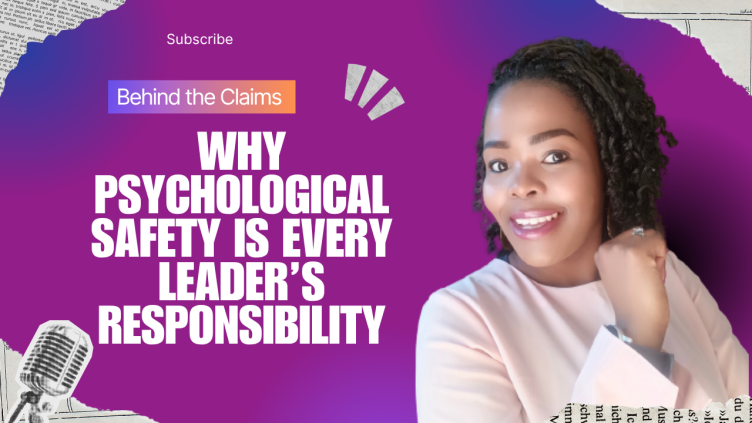
In my recent conversation with Professor Lene Graupner, my biggest takeaway was this: we need to normalize emotional support at work.
To make it as natural to say “I’m not okay” as it is to say “I need a hard hat.” Because when we care for the whole person, not just their productivity; we build safer, stronger, and more sustainable workplaces.
That one insight stayed with me long after our discussion ended. It reminded me that safety isn’t just about avoiding injuries, it’s about creating spaces where people feel seen, heard, and supported.
It’s Not Just a Claim… It’s a Cry for Care
In our conversation, Professor Lene shared something powerful:
“Every injury or illness is a crisis in someone’s life.”
Behind every claim number sits a person who’s hurting, anxious, or unsure where they stand.
And thing is, you can tell a lot about a company’s values by how they handle that one claim. Do they check in, offer support, and make the employee feel seen? Or do they rush to tick a box and move on?
Too often, employees return to work after an injury or sick leave saying, “I felt invisible.” That sentence breaks my heart and it should worry every leader. Because when people feel invisible, you don’t just lose morale; you lose loyalty, productivity, and trust.
Psychological Safety: The Missing Piece in Workplace Safety
We often think safety means hard hats, gloves, and helmets and yes, those are vital. But psychological safety is what keeps people speaking up before accidents happen.
It’s the belief that:
- You can admit mistakes without fear.
- You can raise concerns without retaliation.
- You can share ideas and feedback without being shut down.
When psychological safety is missing, silence takes over. Mistakes are hidden. Feedback dries up. People disengage or quietly quit and all of that eventually shows up in your claims data.
As I said in the episode, psychological safety is the invisible PPE. You can’t buy it at a hardware store, but it’s what protects your people from mental and emotional harm.
What Leaders Can Do, Especially in SMEs
I loved how Prof. Lene highlighted that in SMEs, the owner often wears every hat: HR, finance, safety, operations and that can be overwhelming. But it also means leaders are closer to their people. You can walk the floor, listen to conversations in the corridors, and feel the culture.
Here are a few small but powerful shifts we discussed that every SME owner can start today:
- Stay in touch during absences. A simple “How are you doing?” while someone’s recovering shows care beyond compliance.
- Train supervisors in psychological first aid. They’re on the front line, they need to know how to support, listen, and respond with empathy.
- Encourage open communication. Address the team when someone’s off sick (without oversharing), to prevent rumours and foster transparency.
- Normalize emotional support. Let employees know it’s okay not to be okay. Counseling isn’t a sign of weakness, it’s a tool for resilience.
- Lead by example. As Prof. Lene said, “Talk about your own well-being. Say when you’re tired or need to pause.” That honesty builds trust.
The Link Between Well-being and Productivity
Research and real experience, show a clear connection between how people feel and how they perform. When employees feel cared for, they show up with energy and ownership. When they feel dismissed or unheard, performance is the first thing to suffer.
Many leaders jump to performance improvement plans when the real issue is emotional. Sometimes, what’s needed isn’t a checklist… it’s compassion.
As Prof. Lene reminded us:
“Well-being and performance are linked. When people feel valued and supported, productivity naturally rises.”
A Challenge for Every Leader
So here’s my challenge to every leader reading this: Next time a claim crosses your desk, don’t just sign it. Pause. Ask yourself,
- About our safety practices?
- About the way we treat our people?
- What is this claim telling me about my culture?
That reflection could be the first step toward transforming your workplace culture.
Because behind every claim is a human being and behind every thriving business is a culture that cares.
🎧 Listen to the full episode: You can catch my full conversation with Professor Lene Graupner on Behind the Claim: Spotify and Youtube. It’s a meaningful listen for leaders who believe that safety is more than compliance… it’s care in action.
Leaders, here’s a small challenge: Next time a claim crosses your desk or an employee goes quiet, pause and ask: 👉 What is this telling me about our culture?
Because behind every claim is a human being and behind every thriving business is a culture that cares. 💛
Until next time, stay inspired.
Leesa
